Category: Story

  • The Stranger on My Flight Knew What I Lied About

    The Man Who Sat Next to Me on the Plane Knew My Name — I Had Never Seen Him Before

    I thought it would be a quiet flight.

    Window seat. Headphones. No conversation.

    That was the plan.

    Then the man sat down beside me… and everything changed.

    He looked ordinary. Mid-forties maybe. Plain jacket. No luggage except a thin black folder.

    We didn’t speak during boarding.

    Didn’t even make eye contact.

    But the second the plane lifted off, he turned slightly toward me and said:

    “Relax, Daniel. I’m not here to hurt you.”

    My blood froze.

    I slowly took off one earbud.

    “I’m sorry… what?”

    He smiled politely.

    Not creepy. Not threatening.

    Just… calm.

    “I said relax,” he repeated softly. “You look more nervous than you should.”

    I stared at him. “Do I know you?”

    “No.”

    The way he said it was immediate. Certain.

    “No,” he repeated. “We’ve never met.”

    A chill ran up my spine.

    “Then how do you know my name?”

    He glanced down at his watch before answering.

    Like timing mattered.

    “I know a lot of things about you,” he said. “For example… you almost didn’t board this flight.”

    My fingers tightened on the armrest.

    That was true.

    I had almost missed it because of a last-minute call from work.

    Something inside my chest started beating faster.

    “You hesitated at the gate for eight seconds,” he continued casually. “You checked your phone twice. Then you sighed before stepping forward.”

    I hadn’t told anyone that.

    Not even my wife.

    “Who are you?” I whispered.

    He ignored the question.

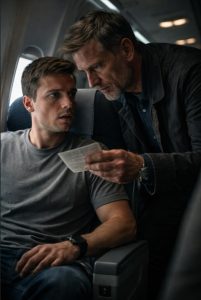
    Instead, he opened the black folder slightly… and slid out a photograph.

    He didn’t hand it to me.

    He just held it where I could see.

    It was a picture of my house.

    Taken from across the street.

    My throat tightened.

    “That was yesterday,” he said.

    My mouth went dry. “Why do you have that?”

    He tilted his head slightly.

    “Because yesterday,” he said, “was the last normal day you were supposed to have.”

    My heart slammed so hard I could feel it in my neck.

    “What does that mean?”

    He finally looked me straight in the eyes.

    And that’s when I realized something was wrong.

    Not with him.

    With the situation.

    Because his expression wasn’t threatening.

    It was… sympathetic.

    Like he felt sorry for me.

    “Daniel,” he said quietly, “in exactly fourteen minutes, something is going to happen on this plane.”

    Every sound around me suddenly felt louder.

    Seatbelt clicks. Engine hum. A baby crying three rows back.

    I swallowed.

    “What kind of something?”

    He didn’t answer immediately.

    Instead, he reached into his jacket…

    …and pulled out a second photo.

    This one made my stomach drop.

    It was a picture of me.

    Taken this morning.

    At the airport security line.

    I hadn’t noticed anyone watching.

    “I’m going to ask you one question,” he said calmly.

    “If you answer honestly, I might be able to help you.”

    My voice barely came out.
    “Help me with what?”

    He slid the photo closer so only I could see it.

    “With what’s coming.”

    My hands started shaking.

    “What question?” I asked.

    He leaned closer.

    Close enough that only I could hear him.

    And whispered:

    “Why did you lie on your passenger form?”

    My heart stopped.

    Because I had lied.

    About something no stranger should ever know.

    I swallowed hard, my fingers clutching the edge of the seat.

    He leaned in, his voice low but steady:

    “You lied about something important on your passenger form. I know because I was sent to make sure it doesn’t cost anyone their life.”

    My pulse hammered. “Who… who sent you?”

    He shook his head. “It doesn’t matter. What matters is why you lied.”

    I realized then that it wasn’t just paperwork. It was a hidden truth… something I thought no one would ever know.

    “Why are you telling me this now?” I asked, my voice trembling.

    “Because,” he said, “in eight minutes, you’ll have to make a choice. A simple choice — but one that will decide who lives and who doesn’t.”

    My mind raced. What could possibly happen on a routine flight that could kill people?

    He handed me a small slip of paper from his jacket. A map of the plane. Marked seats. Numbers. Instructions.

    “I can guide you,” he said quietly, “but only if you follow exactly. And only if you’re honest with me — and with yourself.”

    I looked around. Passengers chatting, scrolling on their phones, completely unaware. Everything seemed normal.

    And yet… I knew it wasn’t.

    He gave me a final look. “This is your chance to fix something you’ve been hiding. Don’t waste it.”

    The plane hit a patch of turbulence. My stomach dropped.

    I unfolded the slip, heart racing.

    And then I realized… what he meant by “your choice” wasn’t about the flight at all.

    It was about the secret I had buried, the truth I had lied about for years.

    The kind of truth that, if exposed, could destroy everything I had built.

    But keeping it hidden now… could cost lives.

    I swallowed again, my hands shaking, knowing that in the next few minutes, I had to decide: protect myself… or do the right thing.

  • The Woman Outside My House Knew What I Did in 1999

    She Was Standing Outside My Gate Every Morning. On Day 7, I Finally Asked Why.

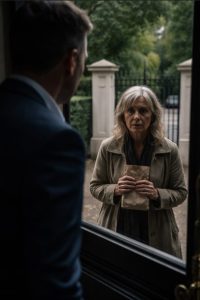
    At first, I thought she was just another passerby.

    My driver noticed her before I did.

    “Sir… she’s there again.”

    Same spot. Same time.
    7:12 a.m.
    Across the street from my house.

    She didn’t beg.
    Didn’t speak.
    Didn’t even look around.

    She just stood there… holding a small paper bag.

    Day one, I ignored her.

    Day two, I told security to keep an eye on her.

    Day three, I started feeling uneasy.

    By day four, I changed my morning routine just to avoid passing her.

    But on day seven…

    she stepped forward.

    Not fast. Not threatening.

    Carefully.

    Like someone approaching a wild animal.

    My driver tensed.
    “Want me to call security?”

    I should’ve said yes.

    Instead, I rolled down the window.

    Up close, she looked older than I first thought. Maybe late fifties. Maybe sixty. Hard to tell. Life had not been gentle with her.

    Her hands trembled as she held out the paper bag.

    “For you,” she said quietly.

    Her voice wasn’t desperate.
    It wasn’t nervous.

    It was… certain.

    I frowned.
    “I think you have the wrong person.”

    She shook her head slowly.

    “No. I don’t.”

    Silence filled the car.

    People like me don’t accept random packages from strangers outside our gates. Especially not in my neighborhood. Especially not from someone who had been watching my house for a week.

    “I don’t want it,” I said.

    She didn’t move.

    Just kept holding it out.

    And then she said something that made my chest tighten instantly:

    “You used to love these.”

    My stomach dropped.

    Because I hadn’t told her my name.
    I hadn’t spoken to her before.
    And no one — absolutely no one — still remembered that detail about me.

    My driver whispered, “Sir… do you know her?”

    I couldn’t answer.

    The woman gently opened the top of the bag.

    Inside were lemon candies.

    Not just any kind.

    The exact brand I used to eat every day when I was a kid.

    A brand that stopped being sold almost twenty years ago.

    My hands went cold.

    “How do you know that?” I asked.

    She smiled.

    Not proudly.
    Not kindly.

    Sadly.

    Because that’s when I noticed something I hadn’t seen before.

    The scar on her wrist.

    A thin, pale line.

    I knew that scar.

    I had seen it once before.

    A long time ago.

    On someone who wasn’t supposed to be alive.

    My throat went dry.

    “That’s impossible,” I whispered.

    She tilted her head slightly.

    “Is it?”

    My driver turned to me.
    “Sir… who is she?”

    I stared at her face again.

    At the eyes.

    At the scar.

    At the way she stood.

    And suddenly, a memory I had buried for twenty-six years clawed its way back to the surface.

    If it was true…

    then the woman standing outside my gate…

    was the one person who could expose the worst thing I had ever done.

    And she hadn’t come for money.

    She had come for the truth. —

    For a moment, I couldn’t breathe.

    Memories don’t usually return all at once. They creep back slowly, like fog.

    But this one hit like glass shattering.

    I stepped out of the car.

    My driver whispered, “Sir, don’t—”

    “It’s fine,” I said. But it wasn’t.

    Up close, her eyes searched mine like she was waiting… not for recognition.

    For honesty.

    “You remember,” she said softly.

    It wasn’t a question.

    My mouth felt dry.
    “I remember a scar,” I said carefully. “That’s all.”

    She nodded once, like she expected that answer.

    “Twenty-six years ago,” she said, “you were sixteen. It was raining. You were driving your father’s car.”

    My heart slammed.

    I hadn’t heard that sentence spoken out loud in over two decades.

    “You hit someone,” she continued. “And you didn’t stop.”

    My driver inhaled sharply behind me.

    I forced a laugh. “You’re mistaken.”

    She didn’t react.

    Didn’t argue.

    Didn’t raise her voice.

    She just reached into her coat… and pulled out a photograph.

    It was old. Creased. Faded.

    But I recognized the street instantly.

    And the car.

    My father’s car.

    Parked under a broken streetlamp.

    My throat tightened. “Where did you get that?”

    “I was there,” she said.

    Silence.

    “You…” My voice cracked. “That’s not possible.”

    She lifted her sleeve slowly.

    The scar on her wrist caught the morning light.

    “You left me there,” she said.

    The world tilted.

    I staggered back a step.

    “No,” I whispered. “They said she died.”

    She shook her head gently.

    “No. They said that so you would never look for me.”

    My chest felt like it was collapsing inward.

    “Why are you here?” I asked.

    Not angry.

    Not defensive.

    Terrified.

    She looked down at the paper bag still in her hands… then back at me.

    “I didn’t come to ruin your life,” she said.

    A pause.

    “I came because I’m dying.”

    My pulse roared in my ears.

    “I wanted to see,” she continued quietly, “if the boy who drove away… ever became a man who could admit what he did.”

    I couldn’t speak.

    Couldn’t think.

    All the years.
    All the success.
    All the awards.
    All the respect.

    And somehow…

    this fragile woman standing in front of my gate held more power over me than any judge ever could.

    She stepped closer.

    Not threatening.

    Not accusing.

    Just tired.

    “I’m not asking for money,” she said.
    “I’m not asking for justice.”

    Her voice softened.

    “I’m asking for the truth.”

    My hands trembled.

    Because in that moment, I realized something worse than exposure…

    She didn’t come to destroy me.

    She came to find out if I had already destroyed myself.

    And the truth?

    I didn’t know the answer.

  • He Gave Her 24 Hours. She Had Nothing Left to Sell.

    The hospital didn’t say Julian was dying.

    They said, “We need confirmation by tomorrow.”

    And somehow, that sounded worse.

    Sofía stood in the ICU hallway at 2:17 AM, staring at a screen that displayed her brother’s heartbeat like a fragile negotiation.

    Beep.
    Pause.
    Beep.

    Every sound felt conditional.

    Julian had always been loud. Restless. Impossible to contain.

    Now machines breathed for him.

    The doctor had been careful with his words.

    “He needs another surgery. Without it… we can’t guarantee stability.”

    Without it.

    Stability.

    Medical language for: prepare yourself.


    Sofía hadn’t slept in two days.

    She had done the math twelve times.

    Emergency surgery. ICU extension. Specialist fees.

    The total wasn’t just high.

    It was unreachable.

    She studied business administration.
    She believed in planning. In discipline. In working hard enough to stay safe.

    But safety had shattered on wet asphalt the night a car didn’t see Julian’s motorcycle.

    Now the hospital administrator stood in front of her with a folder and a sympathetic smile.

    “We’ll need financial authorization by tomorrow at 4 PM.”

    4 PM.

    Not next week. Not soon.

    Tomorrow.


    She called every bank before sunrise.

    Denied.

    Applied for emergency loans.

    Rejected.

    She sold her laptop.

    Her jewelry.

    Even the gold necklace her mother gave her before she passed away.

    Still not enough.

    By noon, she understood something brutal:

    There was no clean way out.

    That was when one name entered her mind.

    Alejandro Torres.

    CEO.

    Untouchable.

    Feared.

    The kind of man who could sign a transfer that would save Julian’s life without blinking.

    The kind of man who never did anything without a reason.


    At 9:42 PM, she stood outside his office in the financial district of Madrid.

    The building was nearly empty.

    But his lights were still on.

    Of course they were.

    Power doesn’t clock out.

    Her reflection in the glass looked cornered.

    She knocked.

    “Come in.”

    His voice was calm. Controlled.

    He didn’t look surprised.

    Maybe men like him are never surprised.

    She explained everything.

    The accident.
    The surgery.
    The deadline.

    When her voice broke, she forced it steady again.

    He listened.

    No sympathy.
    No interruption.

    When she finished, silence filled the room like pressure before a storm.

    He walked to the window.

    Looked down at the city lights.

    “How much?” he asked.

    She told him.

    He nodded once.

    “I can transfer it tonight.”

    Relief hit so fast it made her dizzy.

    Then he turned around.

    “There would be a condition.”

    The word changed the air.

    She felt it.

    He stepped closer, not aggressively — just deliberately.

    “One night,” he said evenly.
    “Discreet. No consequences after. This remains between us.”

    No raised voice.
    No threat.

    Just an offer.

    A transaction.

    Her body went cold.

    He wasn’t forcing her.

    He was giving her a choice.

    And that was worse.

    Because if she agreed… she would carry it forever.

    Julian’s pale face flashed in her mind.

    The clock ticking toward 4 PM.

    She swallowed.

    And nodded.


    Morning arrived quietly in his apartment.

    The money had been transferred.

    The hospital confirmed payment.

    On the table, an envelope waited.

    “As agreed.”

    That was all the note said.

    As agreed.

    Two words that erased nothing.

    She left before he woke up.

    She told herself it was survival.

    Not surrender.

    But survival leaves scars.


    Two weeks later, her inbox vibrated.

    CEO Meeting. 10:00 AM. Mandatory.

    Her chest tightened instantly.

    Had he changed his mind?
    Was silence no longer enough?

    At exactly ten, she entered his office again.

    This time, Alejandro looked different.

    Less controlled.

    More… strained.

    He closed the door.

    Locked it.

    “What happened that night,” he said quietly, “should not have happened.”

    She stared at him.

    That wasn’t what she expected.

    No dominance.

    No reminder of power.

    Instead—

    Regret.

    Before she could respond, he continued.

    “My father is under investigation.”

    The words landed heavily.

    “For what?” she asked.

    He held her gaze.

    “Financial misconduct.”

    Her pulse quickened.

    “Our internal audit uncovered irregular transfers.”

    He walked to his desk and placed a folder in front of her.

    “I need someone I can trust.”

    She almost laughed.

    Trust?

    He opened the folder.

    Inside were documents. Numbers. Signatures.

    Her stomach tightened.

    These weren’t minor discrepancies.

    These were millions.

    Misused funds.

    Hidden accounts.

    And at the center of it—

    His father.

    The founder.

    The man who built the empire.

    Alejandro’s jaw tightened.

    “If this goes public, thousands of employees lose their jobs.”

    “And if it doesn’t?” she asked.

    He didn’t answer immediately.

    Then quietly:

    “Then I become complicit.”

    The room felt smaller.

    He looked at her differently now.

    Not as leverage.

    Not as an intern.

    As someone who knew what it meant to be cornered.

    “I need your help reviewing everything,” he said.
    “You’re thorough. Ethical. You won’t lie to protect me.”

    The irony was almost cruel.

    The man who once negotiated her desperation was now asking for her morality.

    She took the folder home.

    And that was when everything changed.

    Because buried inside the files—

    Was something neither of them had anticipated.

    Something that connected the fraud…

    To the hospital where Julian was treated.

    To inflated contracts.

    To equipment pricing.

    To backdoor deals that suddenly made the numbers in her brother’s invoice look very different.

    Her blood ran cold.

    If she was reading this correctly—

    Julian’s accident wasn’t the only reason she couldn’t afford his treatment.

    Someone had been profiting.

    And Alejandro’s father was at the center of it.

    She looked at the clock.

    2:11 AM.

    Her hands were shaking.

    If this was true—

    Alejandro didn’t just have a moral dilemma.

    He had a war inside his own family.

    And she was holding the match.

    She had until morning to decide.
    Protect the man who saved her brother…
    Or expose the truth that could destroy them all.

    What would you do?

    Sofía didn’t sleep.

    She sat at her kitchen table, the audit files spread around her like evidence in a crime scene.

    The numbers didn’t lie.

    Equipment contracts had been inflated.

    Supplier payments rerouted.

    Private shell accounts receiving percentages from hospital partnerships.

    And one hospital name kept appearing.

    The same hospital where Julian nearly died.

    Her stomach twisted.

    She recalculated everything.

    Again.

    And again.

    There was no mistake.

    Alejandro’s father hadn’t just committed corporate fraud.

    He had quietly profited from inflated medical pricing.

    From desperation.

    From families like hers.

    Julian’s surgery had cost more because someone, somewhere, signed papers that made suffering profitable.

    Her hands began to shake.

    This wasn’t just corruption.

    It was blood money.


    At 6:32 AM, her phone vibrated.

    Alejandro.

    “I need an answer,” he said immediately.

    She didn’t greet him.

    “Did you know?” she asked.

    A pause.

    “Know what?”

    “The hospital contracts,” she said. “The pricing structures.”

    Silence.

    Longer this time.

    When he finally spoke, his voice had changed.

    “No.”

    Not defensive.

    Not angry.

    Something worse.

    Cold realization.


    By 8 AM she was in his office again.

    The folder slammed onto his desk.

    “Your father’s company inflated hospital contracts. They built kickback agreements through shell suppliers. Do you understand what that means?”

    His jaw tightened as he scanned the documents.

    Color drained from his face.

    “That hospital,” she continued, her voice shaking now with anger, “charged me amounts no family could survive. And part of that money went back to your family.”

    The room went very still.

    He looked up at her slowly.

    “If this is true…” he began.

    “It is.”

    His hand pressed against the desk as if the ground had shifted.

    “This will destroy everything.”

    She stepped closer.

    “It already has.”


    By noon, the internal legal team was alerted.

    By 2 PM, whispers spread through executive floors.

    By 4 PM, Alejandro’s father called.

    Sofía was in the room when he answered.

    The voice on speaker was calm.

    Controlled.

    “Son, I hear you’re reviewing historical contracts.”

    Alejandro didn’t look at Sofía.

    “Yes.”

    A pause.

    “Be careful what you dig up. Companies survive on stability. Not morality.”

    Sofía felt something snap inside her.

    Alejandro’s father continued.

    “You’re thinking emotionally. That’s dangerous.”

    Alejandro’s grip tightened around the phone.

    “Did you profit from hospital overpricing?”

    A breath on the other end.

    “Everyone profits,” the older man replied. “That’s how systems work.”

    Systems.

    Not people.

    Systems.

    Julian’s face flashed in Sofía’s mind.

    Beep.
    Pause.
    Beep.

    Alejandro ended the call without another word.


    The board meeting that night turned explosive.

    Half the directors wanted silence.

    “This can be contained.”

    “We restructure quietly.”

    “No need to involve regulators.”

    Alejandro stood at the head of the table, tension visible for the first time.

    “If we bury this,” he said evenly, “we become it.”

    “And if you expose it?” one board member snapped. “You destroy your own father.”

    Alejandro’s voice didn’t shake.

    “He destroyed himself.”

    Then he did something no one expected.

    He turned to Sofía.

    “Including what happened between us,” he said.

    The room froze.

    She felt every eye land on her.

    “What?” someone whispered.

    Alejandro continued.

    “I abused a power imbalance. That will be disclosed as well.”

    Her heart slammed against her ribs.

    This wasn’t part of the plan.

    The board erupted.

    “This is insanity.”

    “You’ll collapse shareholder confidence.”

    “You’re handing ammunition to prosecutors!”

    Alejandro didn’t blink.

    “Truth isn’t ammunition,” he said. “It’s accountability.”


    Within 24 hours, regulators were contacted.

    Within 48 hours, media outlets began investigating.

    Headlines exploded.

    Corporate Empire Built on Medical Overpricing.
    CEO Turns Against Founder Father.
    Internal Misconduct Linked to Hospital Contracts.

    Markets dropped.

    Investors panicked.

    Employees feared layoffs.

    And Alejandro’s father publicly denied everything.

    He went on television.

    Claimed manipulation.

    Claimed political targeting.

    Claimed betrayal.

    Then he said something that changed everything.

    “My son is being influenced by a disgruntled employee.”

    Sofía felt the air leave her lungs.

    It was a warning shot.

    If he couldn’t silence the system—

    He would discredit her.

    Within hours, anonymous leaks began.

    Her internship history.
    Her financial records.
    Questions about “conflicts of interest.”

    They were trying to paint her as opportunistic.

    As someone who manipulated her way upward.

    Her phone filled with unknown numbers.

    Journalists.

    Strangers.

    Threats.

    Alejandro called immediately.

    “Security is being assigned to you.”

    “This is what your father does,” she said quietly.

    “I know.”

    There was something different in his voice now.

    Not guilt.

    Resolve.


    Then the real explosion happened.

    A whistleblower from the hospital accounting department stepped forward.

    He confirmed everything.

    The inflated equipment pricing.

    The shell companies.

    The kickbacks.

    But he added something new.

    “Emergency surgeries were prioritized based on payment speed,” he testified.

    Sofía felt her body go cold.

    “What do you mean?” a reporter asked.

    “Cases with confirmed high-value coverage were moved faster through operating schedules.”

    Julian had waited.

    Because she couldn’t pay immediately.

    Rage flooded her system so violently she had to sit down.

    This wasn’t corruption.

    This was triage influenced by profit.


    Alejandro watched the press conference in silence.

    His father was formally charged within weeks.

    The board fractured.

    Share prices dropped sharply.

    But something unexpected happened.

    Employees began speaking out.

    Other hospitals began reviewing contracts.

    Regulatory agencies widened investigations.

    This wasn’t just one company.

    It was a system.

    And the system had just been exposed.


    Months later, in court, Sofía testified.

    She did not cry.

    She did not dramatize.

    She simply told the truth.

    About the proposal.

    About the imbalance.

    About the inflated bills.

    About the cost of desperation.

    Alejandro also testified.

    Against his own father.

    Publicly.

    Completely.

    He did not defend himself.

    He accepted responsibility for his actions that night.

    And for not seeing the corruption sooner.

    His father avoided eye contact the entire time.


    The company survived.

    Smaller. Restructured. Transparent.

    Independent oversight installed.

    Hospital contracts rewritten nationwide.

    Emergency pricing laws re-evaluated.

    Julian recovered fully.

    He never knew the full weight of what had happened.

    Only that his sister never left his side.


    One evening, months later, Sofía stood outside the same hospital.

    This time, the bills were transparent.

    The contracts revised.

    Alejandro stood beside her.

    Not as CEO.

    Not as savior.

    Not as power.

    Just a man who had chosen exposure over inheritance.

    “You could have walked away,” he said quietly.

    “So could you,” she replied.

    They didn’t touch.

    They didn’t romanticize what happened.

    Some damage leaves permanent marks.

    But silence no longer owned them.


    In the end, it wasn’t the scandal that changed everything.

    It was the decision.

    Desperation had forced one choice.

    Conscience forced the next.

    And when the truth finally detonated—

    It didn’t just destroy an empire.

    It rebuilt the rules.
  • She Accused Me of Stealing Her Diamonds — But the Camera Saw What She Didn’t

    My name is Lila Thompson. I’m 38 years old. And the day my employer called me a thief was the day she discovered who had really betrayed her.

    For four years, I worked for the Hawthorne family.

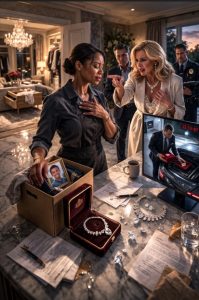
    Their mansion overlooked the hills of Pasadena. Marble floors. Crystal chandeliers. A walk-in closet bigger than my entire apartment. I managed everything: the cleaning staff, deliveries, schedules, security codes. I was trusted with the keys to every room.

    Or so I thought.

    It was a Friday morning when Mrs. Hawthorne stormed into the kitchen, her face pale.

    “My necklace is gone,” she said sharply.

    The room fell silent.

    “The diamond Riviera. It was in my dressing room last night.”

    She turned slowly. Her eyes landed on me.

    “Lila, you were the last person upstairs.”

    My chest tightened. “Yes, ma’am. I locked the doors at 9 p.m., like always.”

    “And now it’s gone.”

    Her husband, Charles, stepped in behind her. “That necklace is worth over eighty thousand dollars.”

    The other staff members looked at the floor.

    “I would never steal from you,” I said quietly.

    Mrs. Hawthorne folded her arms. “Security shows no forced entry. The alarm wasn’t triggered. Only internal access.”

    “I don’t have access to the safe.”

    “But you have access to the room,” Charles said coldly.

    An hour later, I was dismissed.

    No police yet. Just humiliation. Just suspicion hanging in the air like smoke.

    I went home and sat at my small kitchen table, staring at my reflection in the dark window. My son Marcus was doing homework nearby.

    “Are you okay, Mom?” he asked.

    I forced a smile. “Of course.”

    But inside, something was breaking.


    Two Days Later

    Detective Alvarez called.

    “Ms. Thompson, we’d like you to come in for questioning.”

    At the station, he didn’t treat me like a criminal. He studied me carefully.

    “You’ve worked there four years with no incidents.”

    “Yes, sir.”

    “And you didn’t suddenly decide to steal something traceable and insured?”

    I shook my head.

    He leaned back. “There’s something strange about the timeline.”

    Apparently, the house’s main cameras showed nothing.

    But the Hawthornes had recently installed a secondary motion camera in the garage after a delivery mix-up.

    And that camera… recorded more than they realized.


    The Footage

    That evening, Detective Alvarez showed Mrs. Hawthorne something she wasn’t prepared to see.

    The garage camera captured Charles returning home late the night before the accusation.

    He was alone.

    He removed something small from his jacket pocket — a velvet box — and placed it inside the trunk of his car.

    The timestamp matched exactly.

    Thirty minutes later, he re-entered the house through the side door.

    The necklace was never stolen.

    It was moved.


    The Truth

    Charles Hawthorne had mounting gambling debts.

    The necklace had already been evaluated at a private jeweler.

    His plan?
    Claim it stolen. Collect the insurance payout. Cover the losses quietly.

    Blame the house manager.

    Blame the one person with access but no power.

    He never expected the garage camera to record the one blind spot he forgot.


    The Confrontation

    Mrs. Hawthorne didn’t call me.

    She came to my apartment.

    She stood in my doorway, smaller than I had ever seen her.

    “He did it,” she whispered.

    I said nothing.

    “He was going to let you take the fall.”

    Still silence.

    Tears filled her eyes. “I’m so sorry.”

    I looked past her to the streetlights glowing in the evening dark.

    “I didn’t lose my integrity,” I said calmly. “You almost lost yours.”

    She handed me an envelope.

    Inside was six months’ salary — and a formal written apology.

    “I won’t return,” I told her gently. “But I accept your apology.”


    Months Later

    Charles Hawthorne was charged with insurance fraud and financial misconduct.

    Mrs. Hawthorne sold the estate.

    As for me?

    I started my own home management consultancy. Word spread quickly. Clients appreciated discretion, loyalty — and strength.

    At the launch event, a journalist asked me:

    “Are you angry?”

    I smiled.

    “No. Because the truth doesn’t panic. It waits.”

    That night, Marcus looked up at me and asked,
    “Mom, were you scared?”

    “Yes,” I admitted.

    “But I knew who I was. And sometimes that’s the only proof you need.”